Stock Tune, Custom Remap, or a Plug-and-Play Box: Here's Where Your ECU Money Actually Goes
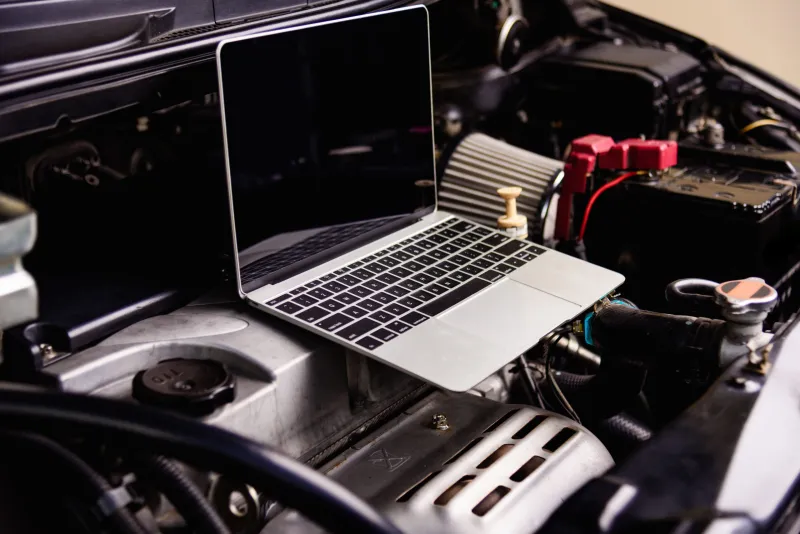
Photo: car ECU tuning dyno performance laptop engine bay, via remappingcourses.co.uk
Walk into any performance shop in the country and you'll hear a version of the same pitch: your engine is leaving power on the table, and the right tune will unlock it. That part is mostly true. What they don't always tell you is which tune, at what cost, with what trade-offs — and that's where the conversation gets interesting.
The ECU tuning world has exploded over the last decade. What used to require a dedicated tuner with a laptop and several hours of dyno time can now apparently be accomplished by plugging a device the size of a candy bar into your OBD-II port. Or so the marketing says. The reality of how these three main approaches actually perform — stock calibration, professional custom tuning, and plug-and-play solutions — is more nuanced, and a lot more honest, than most of what you'll read in sponsored content.
Let's break it down without the sales pitch.
Why the Stock ECU Map Isn't as Dumb as You Think
Before you spend a dollar on any tune, it helps to understand what the factory calibration is actually doing — and why it's set up the way it is.
OEM engineers calibrate ECUs to balance performance, emissions compliance, fuel economy, reliability across a wide range of operating conditions, and, critically, durability across hundreds of thousands of miles. They're also accounting for fuel quality variation across the entire United States, from the 87-octane pump in rural Nebraska to the premium California blend in a Santa Monica sports car dealership.
That last point matters more than most people realize. The factory tune is conservative by design, because it has to work reliably in conditions that a custom tuner never has to worry about. When you're tuning a specific car, on a specific dyno, with a specific fuel, for a specific owner, you get to push those margins.
The flip side? If you've added bolt-on modifications — a cold air intake, an aftermarket exhaust, a larger throttle body — the factory map is no longer calibrated for your actual engine setup. It's still running numbers optimized for stock hardware. That's when you start genuinely leaving performance on the table.
The Custom Tune: What You're Actually Buying
A professional custom tune is the gold standard for a reason, but it's worth understanding precisely what the process involves so you know what you're paying for.
A skilled tuner will put your car on a dynamometer, run it through a series of load and RPM sweeps, and adjust fuel maps, ignition timing, boost targets (if you're forced induction), rev limits, and various other parameters based on real-time data from your specific vehicle. The key word is specific — a custom tune for your turbocharged Subaru WRX accounts for your actual intake setup, your exhaust, your injectors, your intercooler, and the fuel available at your local pump.
Dyno numbers for a well-executed custom tune on a modified platform routinely show gains of 20 to 40 wheel horsepower over a stock map, with meaningful torque improvements throughout the mid-range that make the car feel dramatically more responsive in real-world driving. More importantly, a good tune can be optimized for how you actually use the car — whether that's autocross, road course work, or just spirited canyon driving.
The cost? Expect to pay anywhere from $400 to $900 for a naturally aspirated platform and $600 to $1,500 or more for a turbocharged or supercharged application, depending on the shop and your location. Some high-end tuners working with heavily modified platforms charge significantly more.
The reliability question is where custom tuning gets complicated. A tune done well, by a competent tuner, on a mechanically sound car, is not inherently dangerous to your engine. A tune done aggressively, by someone chasing maximum dyno numbers without appropriate safety margins, absolutely can be. Vet your tuner. Ask for references. Look at their track record with your specific platform.
On resale, a custom tune from a reputable shop is generally seen as a positive by informed buyers — it signals that the car was built thoughtfully. But it can complicate warranty claims if the car is still under any factory coverage, so keep that in mind.
Plug-and-Play Devices: The Real Story Behind the Box
The plug-and-play piggyback market is enormous, and it's built almost entirely on the appeal of easy gains. Devices like basic fuel controllers, boost controllers, and various "performance modules" promise horsepower increases with nothing more than an OBD-II connection and a smartphone app.
Some of these products work — within a narrow definition of "work." A piggyback device that advances ignition timing slightly or adjusts fuel trims can produce real, measurable changes on a dyno. The question is whether those changes translate to meaningful real-world performance, and whether they come with hidden costs.
The honest assessment from multiple dyno operators and tuners who've tested popular plug-and-play solutions is that results vary wildly by product and platform. Some devices show genuine 8 to 15 horsepower gains on specific turbocharged platforms. Others produce numbers that fall within the margin of dyno variance — meaning the gain might not be real at all. And a few products in this space have been shown to create conditions that can accelerate engine wear over time, particularly those that manipulate fuel delivery without accounting for the full range of operating conditions the factory tune was designed to handle.
The pricing is obviously the appeal — most plug-and-play solutions run between $150 and $500, making them accessible to builders who can't yet justify a full custom tune. If you're on a tight budget and you've done your research on a specific product for your specific platform, there are legitimate options in this category. But go in with realistic expectations and a skeptical eye toward any product claiming double-digit horsepower gains from a device you can install in five minutes.
One practical concern that doesn't get enough attention: some piggyback devices can interfere with diagnostic systems and trigger check engine codes that complicate future service work. Ask about this before you buy.
The Side-by-Side That Actually Matters
Let's cut to what most people actually want to know — how do these three options stack up across the metrics that matter to a performance driver?
Raw power gains: Custom tune wins, and it's not close on a modified platform. Stock maps are optimized for stock hardware. Plug-and-play solutions can be effective but are inconsistent.
Drivability: A well-executed custom tune typically improves throttle response, smooths out power delivery, and can eliminate factory-programmed hesitations. Stock maps are smooth but conservative. Some plug-and-play devices introduce abrupt power delivery that can actually make the car harder to drive at the limit.
Reliability: Stock maps are the safest baseline. Custom tunes from reputable tuners are comparable in reliability when done properly. Plug-and-play devices introduce the most variability — quality control across the market is inconsistent.
Resale value: Custom tunes from known shops can be a neutral-to-positive factor. Plug-and-play devices are generally easy to remove, which is a point in their favor from a resale standpoint.
Cost efficiency: For a stock or lightly modified car, a custom tune offers the best return on investment. For a heavily modified platform, it's essentially non-negotiable.
Where to Start
If your car is bone stock, the honest answer is that a custom tune probably isn't your highest-priority investment yet. Get your hardware modifications in place first — intake, exhaust, supporting upgrades — and then tune the whole package together.
If you're running modifications and still on a factory map, a custom tune should be near the top of your list. You're literally leaving performance on the table every time you drive.
And if you're eyeing a plug-and-play solution, spend time on platform-specific forums and look for real dyno sheets from real users before you commit. The good products exist. So do the ones that are just taking your money.
The ECU is the brain of your build. Treat it like one.