Rowing Gears Wrong: The Manual Transmission Shift Timing Mistakes That Are Bleeding Your Lap Times
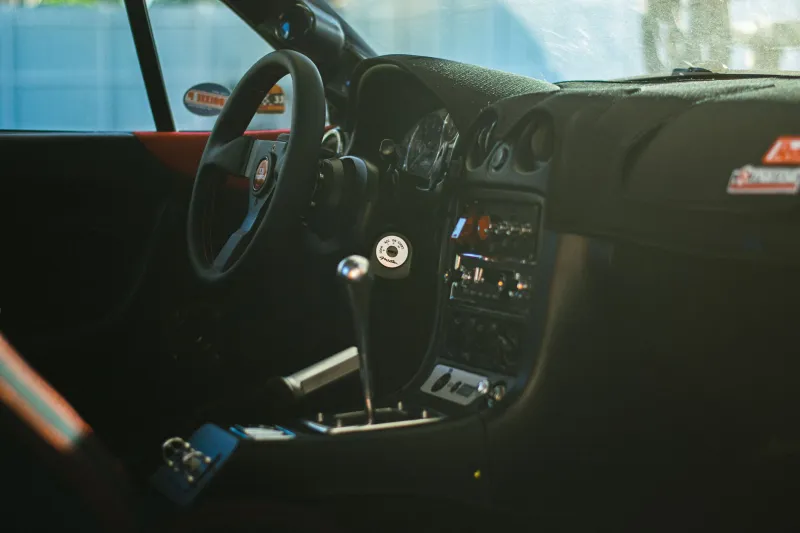
There's a certain pride that comes with driving a manual. You're in control — you choose when to shift, how hard to push, and when to let the engine breathe. But here's the uncomfortable truth: most drivers who swear by their stick shifts are shifting at completely the wrong time. Not occasionally. Consistently. And it's costing them real performance every single time they hit the road or the track.
This isn't about whether you can drive stick. It's about whether you're driving it well. The difference between a driver who understands shift point strategy and one who's just winging it can be measured in tenths of a second per corner, and those tenths stack up fast over a full lap.
Why "Redline = Shift" Is a Dangerous Oversimplification
The first thing most new manual drivers learn is to shift near redline. And honestly? That's not the worst starting point. But it treats every gear, every RPM, and every engine as if they're identical — and they're not.
Every engine has a torque curve and a horsepower curve, and those two lines tell completely different stories. Peak horsepower typically lives at a higher RPM than peak torque, and where those curves intersect relative to your gear ratios determines your actual optimal shift point. On a lot of naturally aspirated four-cylinders, that sweet spot sits a few hundred RPM before the redline, not at it. Holding all the way to the rev limiter in those cases isn't aggressive driving — it's just noisy.
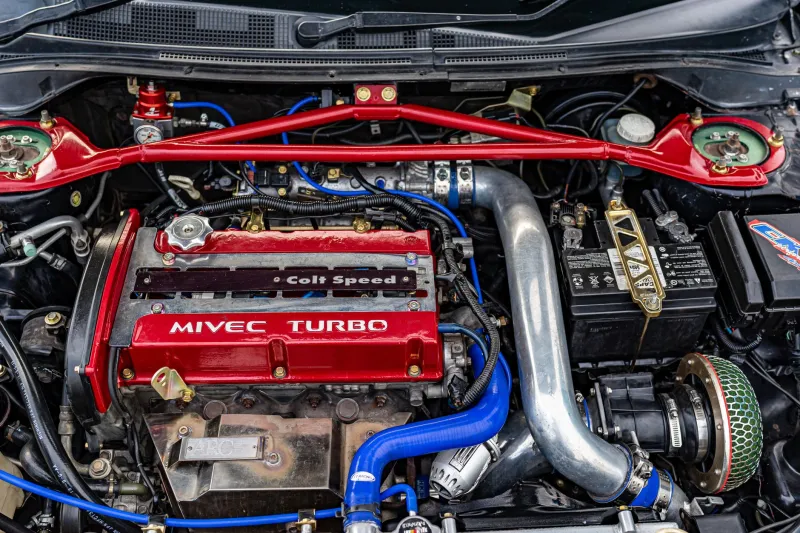
Turbocharged engines complicate things further. Boost builds with RPM, but it also takes time to recover after a shift. If you're rowing gears in a boosted car and dropping the revs too far between shifts, you're spending the first half of every gear chasing boost you already had. Keeping the RPM in the powerband after the shift — meaning you're not dropping below the point where boost pressure recovers quickly — is often more important than squeezing every last rev out of the current gear.
The Math Behind the Shift Point
Here's the core concept: you want to shift at the point where the engine's power output in the next gear exceeds what it's making in the current gear. That's it. That's the whole equation.
In practice, this means looking at your dyno sheet or at least understanding your engine's powerband. If your car makes peak power at 6,500 RPM and drops off sharply above that, shifting at 7,200 RPM isn't helping you — you've already passed the power peak and you're just burning time at the top of the rev range where the engine is running out of steam.
A useful rule of thumb: if your gear ratios are relatively close together (like most modern performance cars), you can usually get away with shifting a bit earlier and staying closer to peak torque. If the ratios are spread out — like in older muscle cars or trucks — you'll want to shift higher to make sure you land in the powerband after the gear change.
This is also why some drivers swear their car "pulls harder" after a tuner adjusts their shift light settings. The hardware didn't change. The strategy did.
Street Shifting vs. Track Shifting: Two Completely Different Games
On the street, you're optimizing for a different set of variables. Fuel economy, smoothness, and traffic awareness all factor into when you row through the gears. Most street drivers shift well below peak power RPM, which is actually fine for daily driving. You're not racing anyone. You're just commuting.
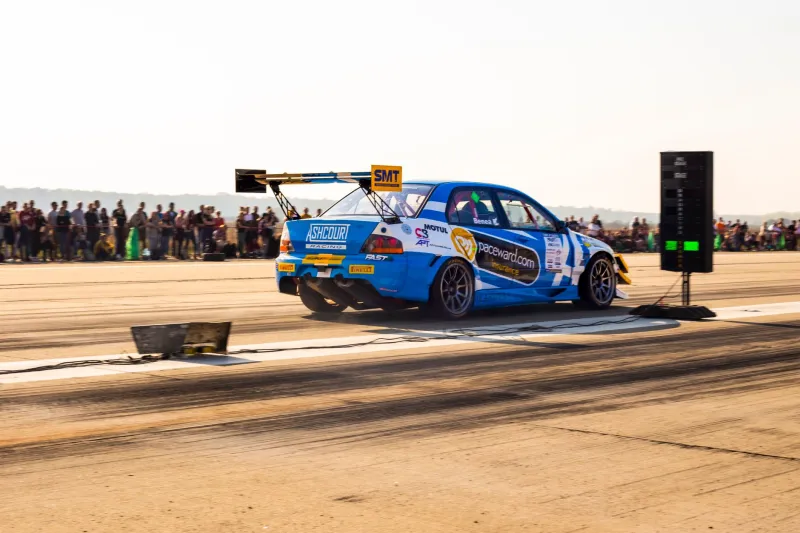
But the moment you roll onto a track or line up for an autocross run, the calculus changes completely. Now you're optimizing purely for acceleration and exit speed. Every gear change should be executed with the goal of keeping the engine in its happy place — the RPM range where it's making the most usable power — for as long as possible.
Corner exit is where this gets especially critical. Coming out of a slow corner in third gear at low RPM when you should be in second gear screaming toward the power peak is one of the most common mistakes club racers make. You think you're being smooth. What you're actually doing is lugging the engine through the most important part of the corner — the part where you're building the speed you'll carry down the next straight.
Rev-Matching: The Skill That Ties It All Together
Rev-matching on downshifts is often treated as a fancy technique for show-offs. It's actually fundamental to fast, smooth driving. When you downshift without blipping the throttle to match revs, the drivetrain experiences a jolt as the engine catches up to the transmission speed. That jolt upsets the car's balance — especially under braking — and it adds wear to your synchros and clutch over time.
For track driving, smooth weight transfer is everything. A rev-matched downshift keeps the car settled, lets you trail-brake deeper into corners, and positions the engine exactly where you need it for the exit. A sloppy downshift does the opposite: it pitches the car, breaks traction at the worst possible moment, and leaves you fighting the wheel instead of steering it.
Practicing rev-matching on public roads is genuinely one of the highest-value skills you can develop as a performance driver. It doesn't cost anything. It doesn't require modifications. And it will make you faster immediately.
Finding Your Personal Shift Sweet Spot
The honest answer is that your ideal shift point is specific to your car, your tires, your gearing, and the corner you're in. There's no universal number. But here's a practical framework for finding it:
Step one: Get a dyno sheet or at least study your engine's published torque and horsepower curves. Know where peak power lives and where the curve starts falling off.
Step two: On a safe, empty stretch of road or at a track day, experiment with shifting at different RPMs and pay attention to how the car pulls after each shift. You want to land in the next gear at or near where the torque curve starts climbing, not in the dead zone below it.
Step three: Use data if you can. A simple lap timer app or a more sophisticated data logger will show you where you're losing time. Slow corner exits almost always point to gear selection issues.
Step four: Practice consistency. The best shift point executed inconsistently is worse than a slightly suboptimal shift point you nail every single time. Muscle memory matters.
The Takeaway
The manual transmission is one of the most direct connections between driver and machine in motorsport. But that connection only works in your favor if you understand what the engine is actually telling you. Shift too early and you're leaving power on the table. Shift too late and you've already passed the peak. Rev-match poorly and you're fighting the car instead of driving it.
The good news? This is all fixable, and none of it requires a single bolt to be turned. It's pure driver development — the kind of improvement that shows up immediately in your lap times and stays with you forever. Get to know your powerband, respect the physics, and start treating every gear change as a decision, not a reflex.