Gearbox or Bust: How the Wrong Transmission Kills Every Horsepower Gain You've Ever Made
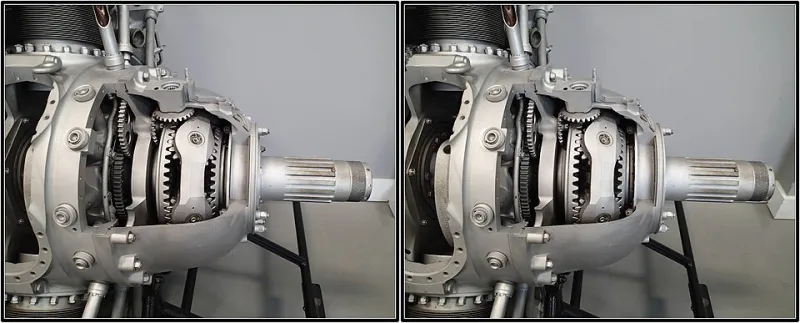
Photo: Robbie Sproule from Montreal, Canada, CC BY 2.0, via Wikimedia Commons
You've done the work. New injectors, upgraded intercooler, a proper tune from a shop you actually trust. The dyno sheet says you're pushing numbers that should embarrass most factory sports cars. And yet, every time you merge onto the highway or line up at a roll race, something feels... off. The car isn't translating all that power into speed the way you expected.
Here's a truth that doesn't get talked about enough in the tuning world: your engine is only half the equation. The other half — the part that actually decides how much of that power reaches the pavement — is your transmission. Get it wrong, and you're essentially pouring money into a bucket with a hole in the bottom.
The Power Transfer Problem Nobody Warns You About
Think of your drivetrain as a chain. Engine, transmission, driveshaft, differential, wheels. The power your engine makes has to travel through every single link before it does anything useful. If any one of those links is weak, undersized, or just plain wrong for your application, the chain fails — not dramatically, but quietly, in the form of wasted potential.
Transmissions aren't passive components. They actively shape how power is delivered. Gear ratios determine how hard the engine pulls in each gear. Shift speed determines how long you're off-boost or out of the powerband during transitions. Torque capacity determines whether the whole thing survives your Saturday morning antics. Ignore any of these factors, and your expensive engine build becomes a very elaborate way to spin your tires in first gear and then disappoint everyone in every gear after that.
Manual vs. Automatic vs. CVT: Real Talk for Real Builds
Manual Transmissions
For a lot of enthusiasts, the manual is still king — and in many performance contexts, that reputation is earned. A good manual box gives you direct mechanical control over gear selection, which means you're never waiting on a computer to figure out what you want. In drag racing applications, a well-driven manual with a solid clutch setup can be extremely competitive, especially in classes where automatic transmissions are restricted.
But manuals have limits. High-horsepower builds put enormous stress on clutch discs and pressure plates. Once you're pushing past 400 wheel-horsepower in a street-driven car, you're going to start shopping for upgraded clutch kits — and those get expensive fast. Beyond that, the T56 Magnum, Tremec TR-6060, and similar heavy-duty units are the go-to platforms for serious builds. Stock five-speeds from factory economy cars? Those are time bombs once you start making real power.
Automatic Transmissions
The modern performance automatic has completely shed its old reputation as the lazy driver's choice. Units like the GM 10L90, Ford's 10R80, and the legendary 4L80-E (in built form) are legitimate performance weapons. The key advantage is consistency — an automatic doesn't care if you're nervous, tired, or distracted. It hits the same shift point every single time, which matters enormously in timed competition.
The aftermarket support for platforms like the 4L60-E and 4R70W is massive. You can build these transmissions to hold over 1,000 horsepower with the right internals, and a good valve body kit combined with a performance torque converter will tighten shift response dramatically. The converter, by the way, is critical. A stock converter on a boosted build is like running stock brake pads on a track car — technically functional, completely inadequate.
CVT Transmissions
Let's be blunt: if you're building a performance car and it came with a CVT, the transmission conversation ends with a swap discussion. CVTs are engineered for fuel economy and smooth daily driving. They're not built for torque spikes, aggressive launches, or sustained high-load operation. Even the "sport mode" in most CVT-equipped vehicles is a software trick that simulates stepped shifts — it doesn't change the fundamental mechanical limitations of the unit. For any speed-focused build, a CVT is a liability, not an asset.
Gear Ratios: The Math That Actually Matters
Gear ratios are the hidden performance variable that most beginners completely overlook. A numerically higher first-gear ratio means more mechanical advantage — the engine spins more times per wheel rotation, which translates to stronger acceleration but a lower top speed in that gear. A numerically lower ratio does the opposite: less pulling power, but you carry speed more efficiently.
When you modify an engine for more power, especially with forced induction, you're often shifting where the power lives in the RPM range. A big turbo might push peak torque higher in the rev range than the stock unit did. If your gear ratios are set up for a stock power curve, you might find yourself constantly short-shifting out of the powerband or lugging the engine when you should be screaming.
This is why transmission tuning — whether through software on an automatic or final drive ratio changes — is a legitimate performance modification, not just a mechanical afterthought.
When to Upgrade vs. When to Swap
This is the question every builder eventually faces, and the honest answer depends on your power goals and how much you value your weekends.
For builds under 450 wheel-horsepower, a quality rebuild of your existing unit with upgraded clutch packs, a shift kit, and a better torque converter (on automatics) is usually the smart financial move. You're reinforcing what's there, and the platform can handle the job with some help.
Once you push past that threshold — especially if you're running a vehicle that came with a weaker factory transmission — the calculus changes. Rebuilding a fragile unit over and over costs more in the long run than a one-time swap to a platform with real aftermarket support. The 4L80-E swap into GM vehicles, the T56 swap into older Mustangs, and the Getrag swap scene for import builds all exist because builders got tired of paying to fix the wrong tool for the job.
The Shift Strategy Nobody Talks About
On automatics, don't sleep on shift strategy tuning. If your car has an ECU-controlled transmission, a good tuner can modify shift points, shift firmness, and torque converter lockup behavior to match your engine's modified power curve. This is often one of the highest-value adjustments you can make, and it costs far less than hardware changes.
On manuals, the conversation is about clutch engagement technique and knowing your powerband cold. The fastest manual-car drivers aren't necessarily the most aggressive — they're the most precise. Short-shifting to stay in the fat part of the torque curve often beats rev-hanging for pure acceleration.
Bottom line: your engine build is only as fast as the transmission behind it. Spend accordingly.